
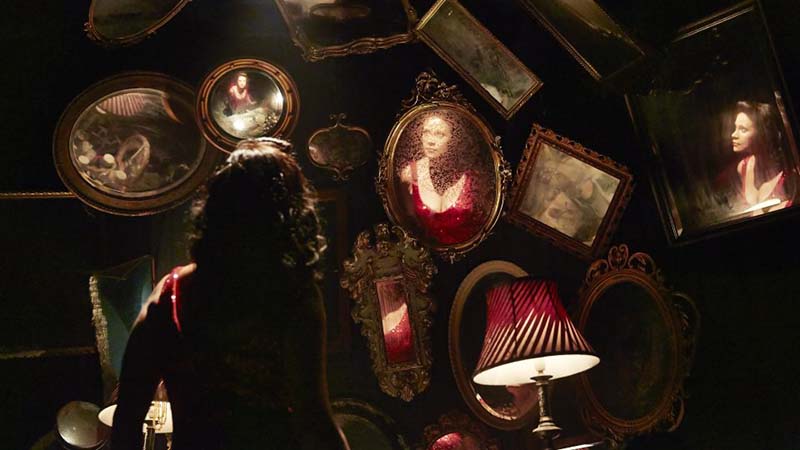
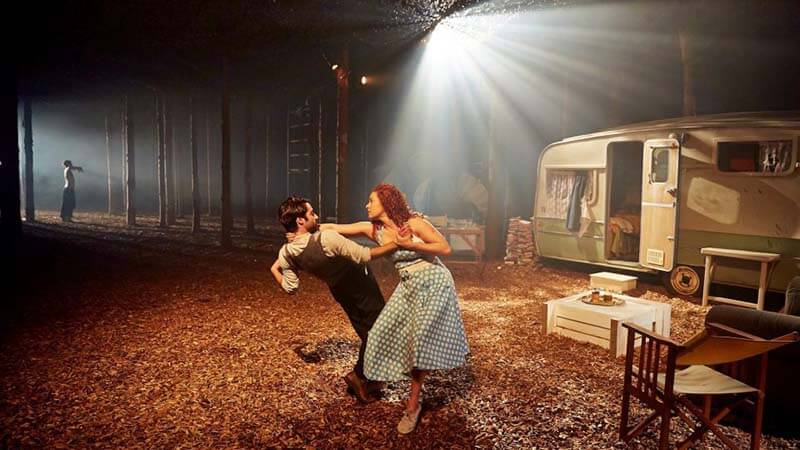
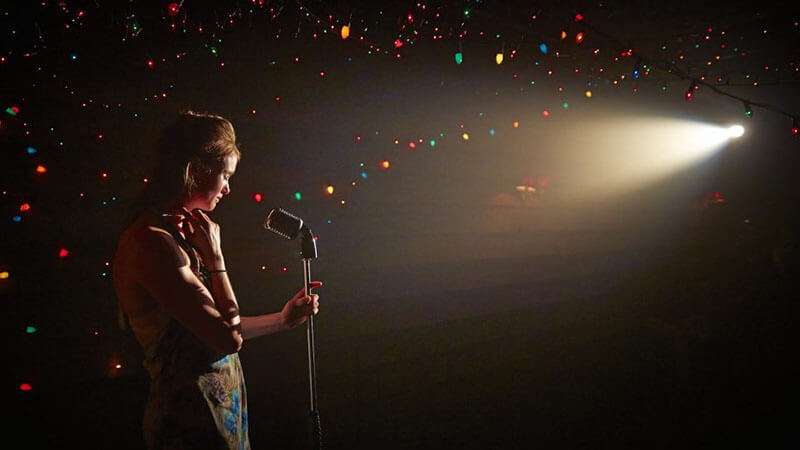
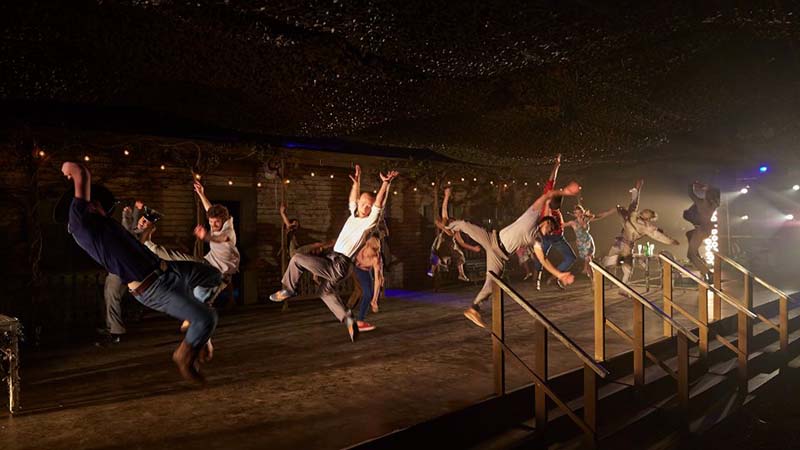
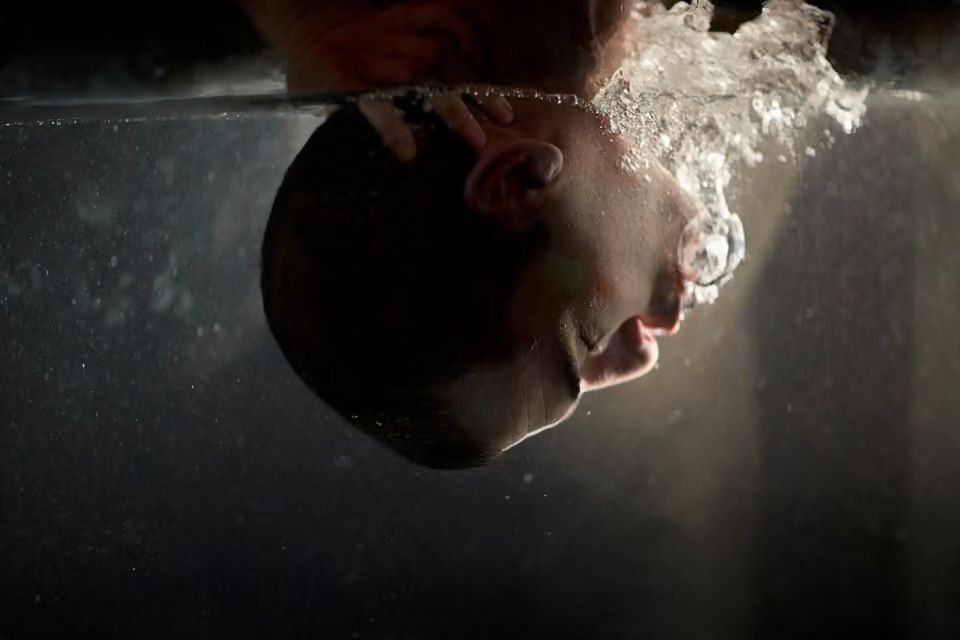
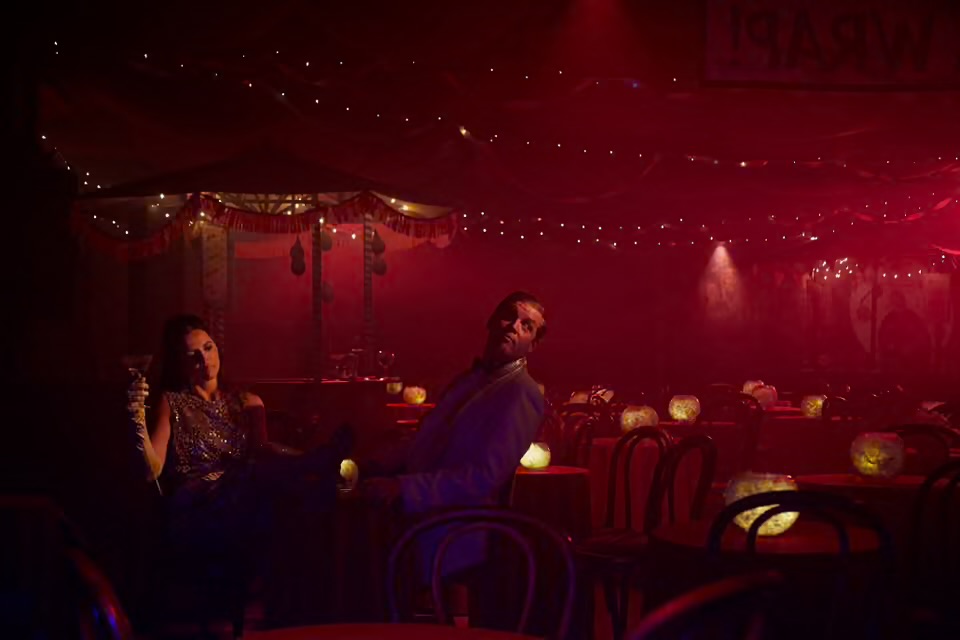
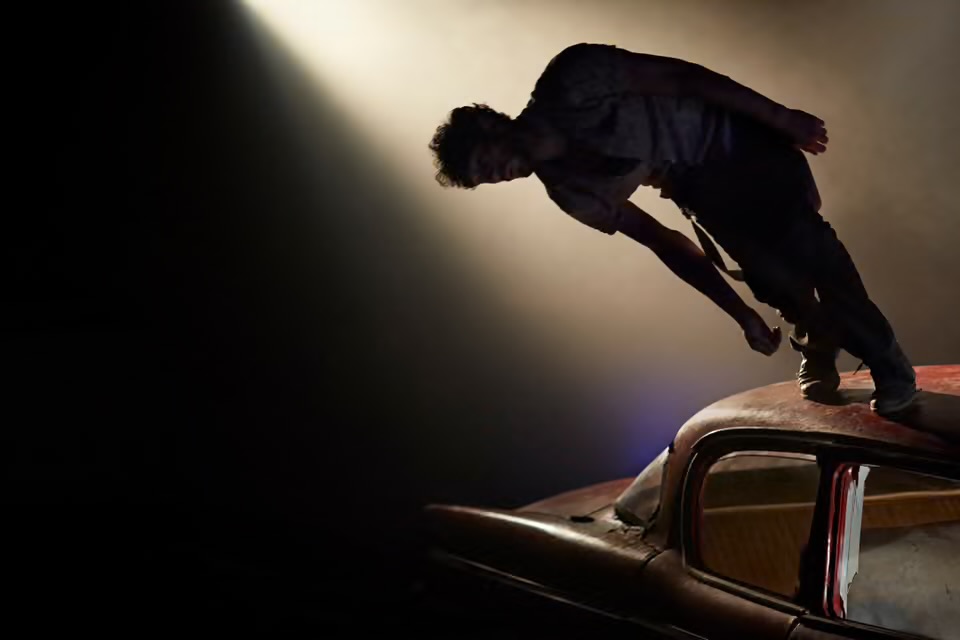
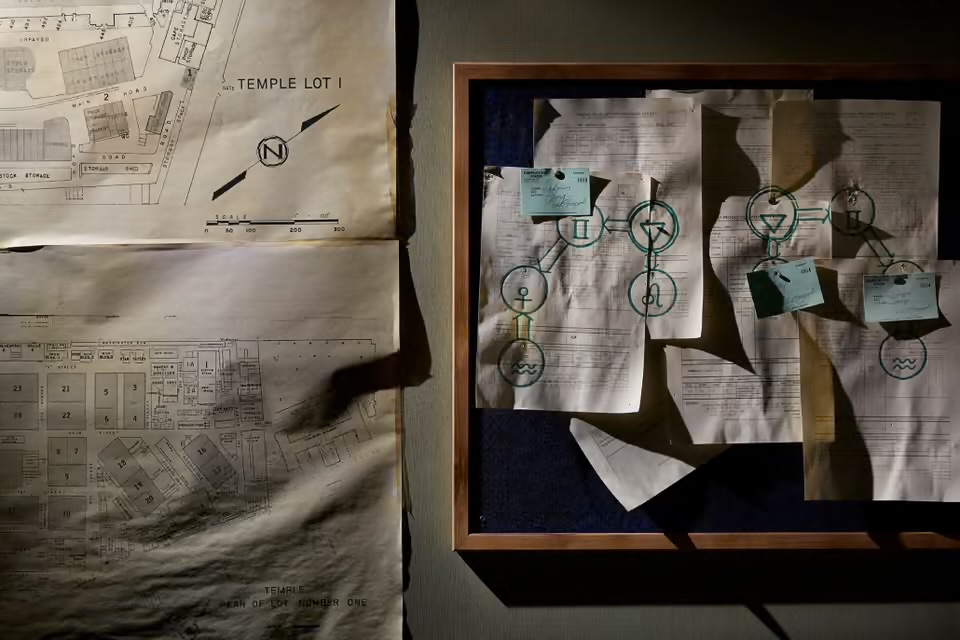
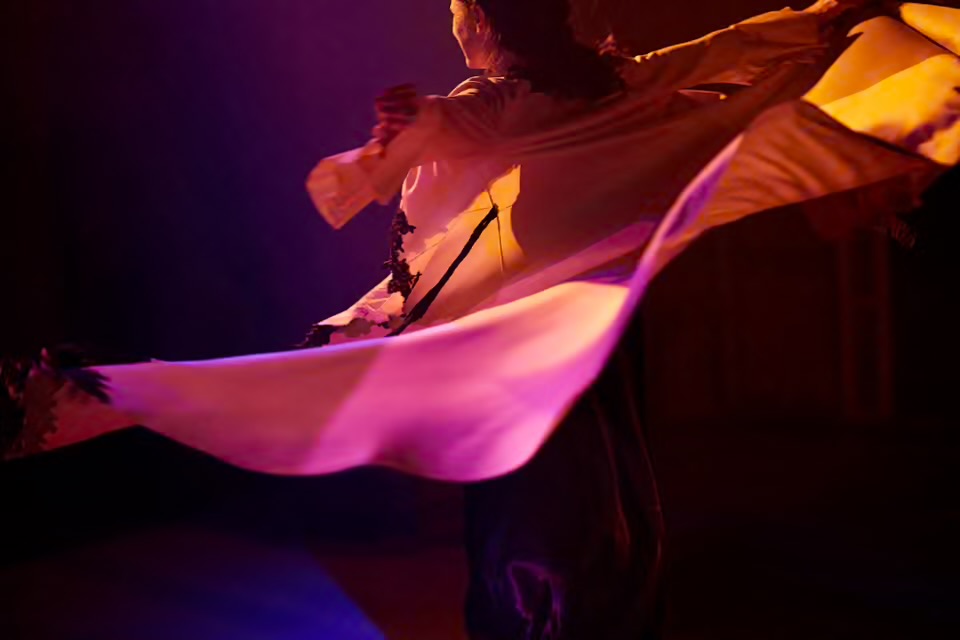
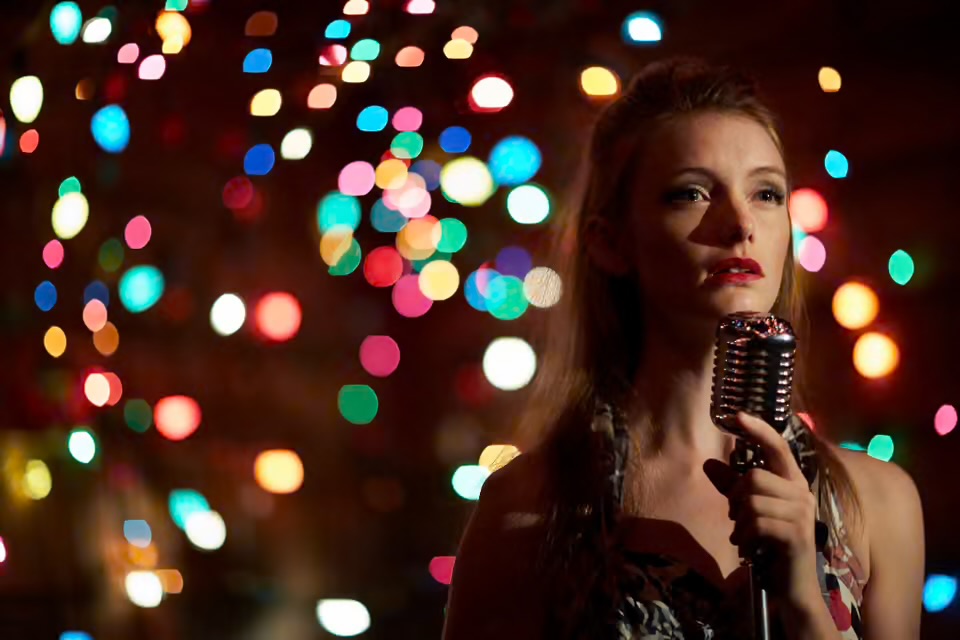
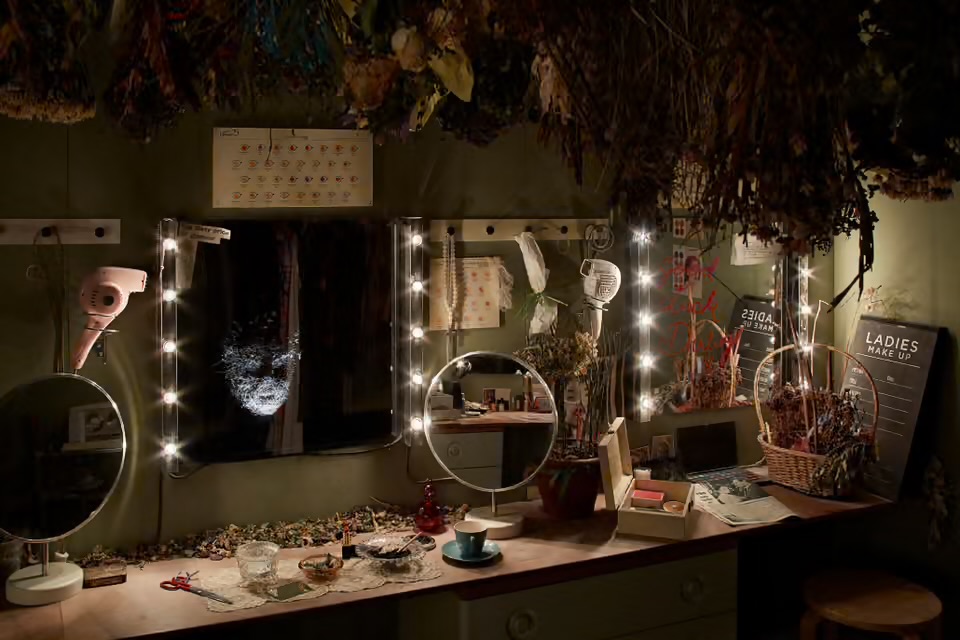
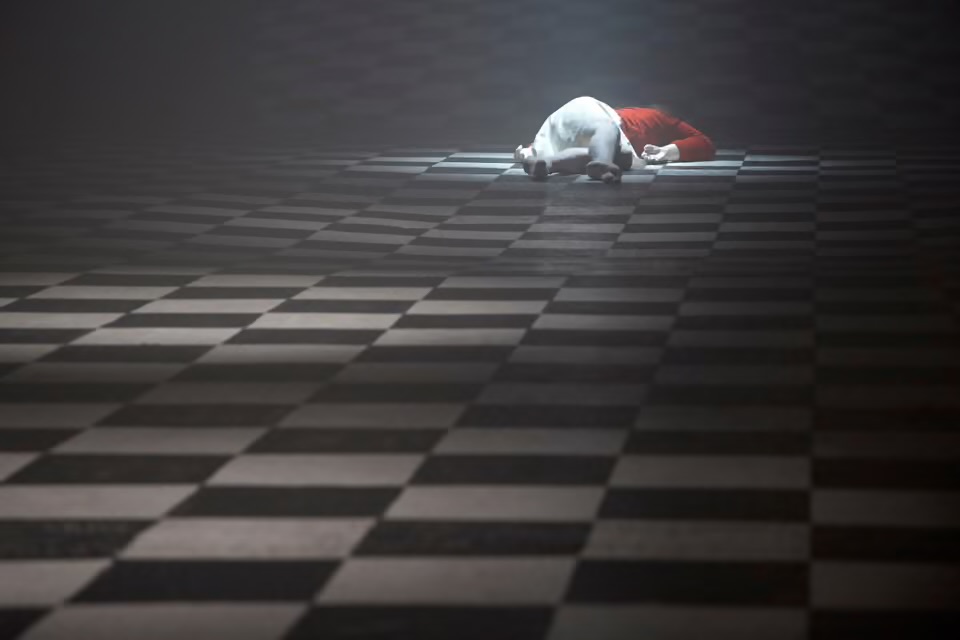



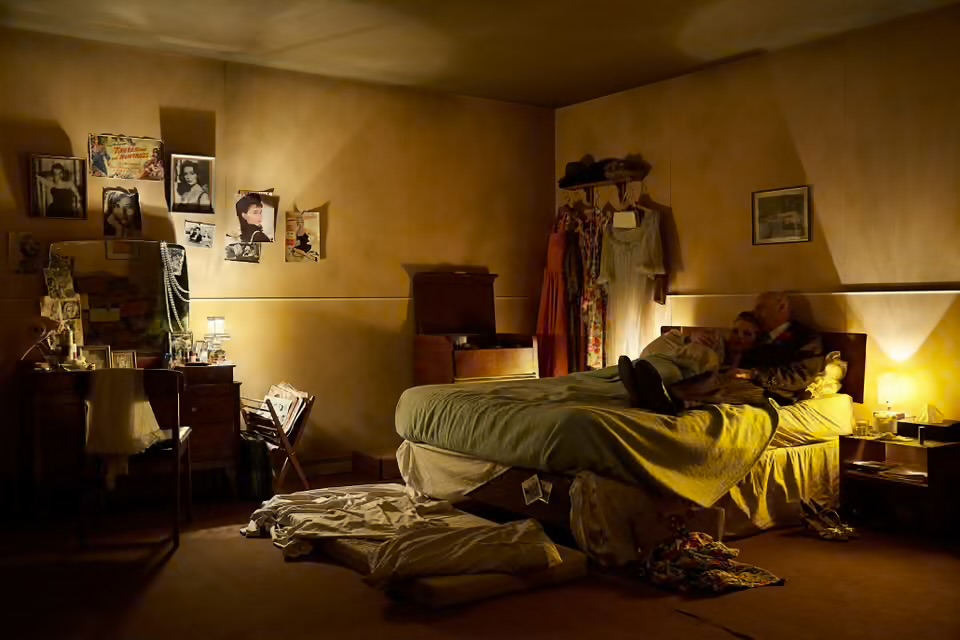
The Drowned Man: A Hollywood Fable (2013) is a large-scale immersive theatre production by Punchdrunk, directed by Felix Barrett. The work is set within a fragmented, noir-inflected vision of 1960s Hollywood and was staged across a vast warehouse environment at Temple Studios, London. Masked audience members are invited to move freely through an extensive architectural world composed of film studios, desert landscapes, bars, trailers, dressing rooms, and private interiors. Narrative is non-linear and unfolds through overlapping scenes, choreographed movement, repetition, and temporal loops rather than through sustained dialogue. Spectators construct their own experience by choosing where to go, whom to follow, and how long to remain in any given space. The performance privileges atmosphere, sensory immersion, and embodied spectatorship over plot coherence. Sound design, lighting, scenography, and physical performance function as primary narrative agents.
The Drowned Man exemplifies Punchdrunk’s immersive methodology. The work collapses conventional distinctions between stage and auditorium, positioning the audience as mobile witnesses embedded within the fictional world. A key attribute of the performance is its use of repetition and simultaneity: scenes recur across multiple spaces and timelines. The production is notable for its expressionistic physical language and cinematic scenography, which draw on film noir aesthetics while resisting narrative closure. As such, The Drowned Man is frequently cited in studies as a landmark example of contemporary immersive theatre.
This is a collection of taxonomy terms that allow a type of immersive or XR performance to be categorised.